
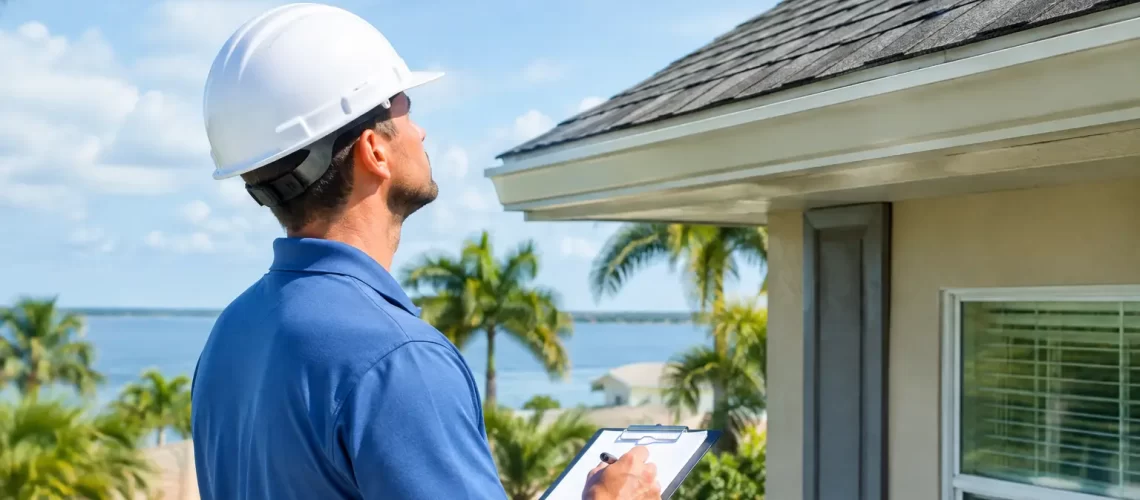
A roof can look perfectly fine from the street and still leave a Florida homeowner paying more for insurance than necessary. A wind mitigation inspection documents the construction features that may help a home withstand high winds, giving insurance carriers the information they need to evaluate available discounts. For buyers and sellers in Tampa Bay, it is a small report with potentially meaningful financial and negotiation implications.
It is also one of those Florida real estate details that deserves attention before the final days of a transaction. The inspection does not guarantee an insurance premium, and it does not replace a full home inspection or roof evaluation. It can, however, turn vague assumptions about a property’s storm readiness into documented facts.
What a Wind Mitigation Inspection Covers
A wind mitigation inspection is a visual review of specific building features tied to wind resistance. The inspector completes a standardized report, often called a wind mitigation form, with photographs and supporting documentation where available. The report is typically provided to the homeowner, who can submit it to an insurance agent or carrier for review.
The inspector is not grading the home as “safe” or “unsafe.” Instead, they are identifying qualifying features. A newer home may have several of them by design, while an older St. Petersburg bungalow may have been improved over time with a better roof covering or rated opening protection. Age alone does not tell the whole story.
The features insurers commonly review
While carrier requirements can vary, a report generally addresses the roof covering, roof deck attachment, roof-to-wall connections, roof geometry, secondary water resistance, and protection for windows, doors, garage doors, and other openings.
Roof geometry is a good example of why details matter. A hip roof, which slopes down on all sides, may qualify for a credit that a gable roof does not. Roof-to-wall connections can matter, too. Metal straps or clips that connect the roof structure to the walls may be documented as a more wind-resistant feature than older attachment methods.
Opening protection is often misunderstood. Impact-rated windows may help, but they are not the only route. Properly rated shutters or panels may also qualify when they protect the required openings and can be verified. An inspector needs to see evidence of the product rating and how the protection is installed. A stack of unmarked plywood in the garage will not serve the same purpose on the report.
Why It Matters When Buying a Home
In coastal and near-coastal Florida markets, insurance affordability has become part of the practical cost of ownership. Buyers should not treat a wind mitigation report as an afterthought, particularly when comparing two homes with similar prices but very different roof ages, window protection, or construction details.
The report can help a buyer and insurance professional build a clearer picture of the home’s potential insurance profile. That is useful before making final decisions about a purchase, renovation priorities, or the total monthly housing budget. It may also highlight features worth preserving. If a home has qualifying shutters, for example, a buyer should understand their value before replacing or removing them.
There is a trade-off: an older report may still be informative, but it may not reflect a roof replacement, window upgrade, or other improvement completed since the inspection. Insurance carriers also set their own underwriting standards and may request additional information. For that reason, buyers are generally best served by reviewing the existing report early and confirming current insurance requirements with their chosen insurance professional.
A wind mitigation inspection should be considered alongside, not instead of, the general home inspection, roof inspection when appropriate, four-point inspection, flood information, and insurance quote. Each answers a different question. The goal is not to create alarm. It is to avoid discovering a material cost or documentation issue after a buyer has already become emotionally committed to the home.
What Sellers Should Do Before Listing
For sellers, a current wind mitigation report can make a listing easier to understand and easier to position. If the home has a newer roof, impact openings, hurricane shutters, or documented roof-to-wall connections, those details can support a more informed conversation with prospective buyers.
That does not mean presenting the report as a promise of a certain insurance rate. Premiums depend on the carrier, coverage choices, claims history, location, deductible, roof age, and other factors. Still, clear documentation is better than speculation. It gives buyers something concrete to share with their insurance agent during the due diligence period.
If an older report is available, gather it with permits, roof invoices, product approvals, shutter documentation, and any records related to window or door replacements. These materials can help an inspector identify qualifying features efficiently. A seller who has invested in storm-related improvements should not assume those upgrades will be obvious to a buyer or visible during a quick showing.
If the report exposes a limitation, such as missing opening protection, that is not automatically a reason to rush into a project before listing. The right decision depends on cost, timing, likely buyer expectations, and the home’s broader condition. Sometimes documentation and transparent pricing are the more sensible path. Other times, a focused improvement may have value beyond insurance, especially if it improves daily comfort, security, or buyer confidence.
Timing a Wind Mitigation Inspection in a Transaction
The best timing depends on whether you are buying, selling, or simply reviewing your current coverage. Homeowners often order an inspection after a roof replacement or other qualifying upgrade. Sellers may choose to obtain one before going on the market so the information is ready when buyers ask about insurance.
Buyers should request any existing report as early as possible and avoid waiting until the end of the inspection period to investigate insurance. If no report exists, an inspection may be arranged during due diligence. In a competitive situation, that advance planning can prevent a rushed decision later.
It is worth remembering that a wind mitigation inspection has a narrow purpose. It is not a warranty that the roof has years of useful life remaining, a determination that every opening will perform in a storm, or a prediction of storm damage. A home can receive favorable wind-mitigation findings and still need roof repairs, maintenance, or separate evaluation by a qualified specialist.
Questions Homeowners Often Ask
Will a wind mitigation inspection lower insurance costs?
It may. The report can identify features that qualify for discounts under a carrier’s guidelines, but the actual premium impact varies. Ask your insurance agent to review the completed report rather than estimating savings based on one feature alone.
Does a new roof automatically mean discounts?
Not necessarily. A newer roof can be valuable for several reasons, but wind mitigation credits depend on the documented construction details and the insurer’s current rules. Roof deck attachment, roof-to-wall connections, and opening protection are separate considerations.
How long is the report valid?
Many reports are used for multiple years, but carriers can have their own requirements. A new report may be worthwhile after major improvements or when an insurer requests updated documentation.
Should condo buyers get one?
It depends on the building, the association’s insurance structure, and the unit’s features. Condo buyers should ask how the building is insured and which responsibilities belong to the association versus the unit owner. A report for a single-family home does not translate neatly to every condominium purchase.
A Practical Part of Better Preparation
Florida homes ask buyers and sellers to pay attention to details that may not come up elsewhere: flood zones, roof condition, insurance documentation, and the design choices that affect storm resilience. A wind mitigation report is one practical piece of that larger picture.
When the report is reviewed early, it can replace uncertainty with better questions and more realistic planning. Whether you are preparing a home for sale or evaluating a potential purchase, Kinest Realty can help you keep those questions organized so important property details are addressed with care, not rushed at the finish line.
