
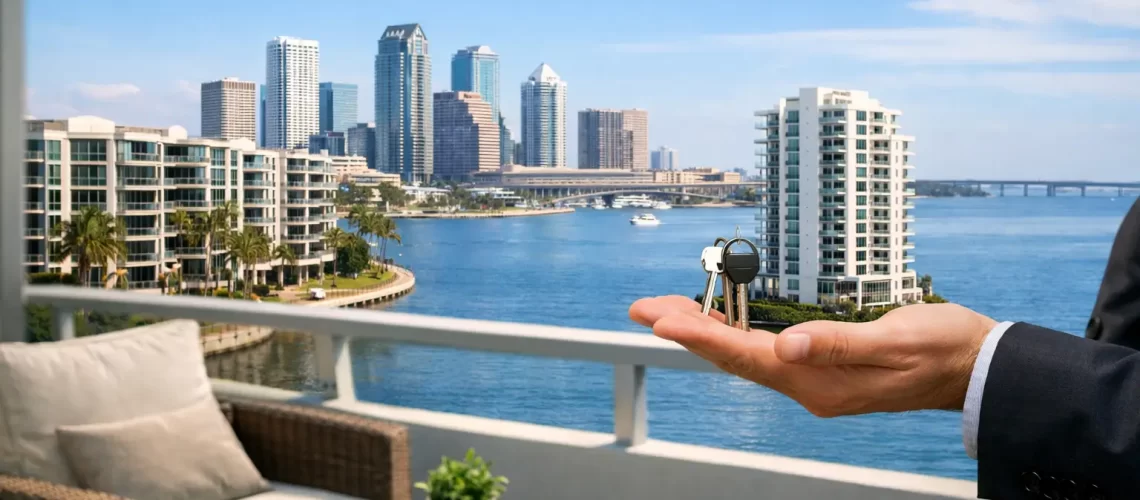
That top-floor corner unit with a water view can make a fast, emotional impression. But a smart Tampa Bay condo buying guide starts one step earlier – with the building itself. In this market, buyers are not just choosing a floor plan or a balcony view. They are also choosing an association, a fee structure, a maintenance reality, and a location that can feel very different block to block.
For many buyers, condos are appealing for good reason. They can offer a lower-maintenance lifestyle, amenities, walkability, and access to neighborhoods that might feel out of reach in the single-family market. They can also be a strong fit for downsizers, seasonal residents, first-time buyers, and investors looking for residential income property. Still, condo purchases in Tampa Bay come with details that deserve close attention, especially near the water, in older buildings, or in communities with extensive shared amenities.
How to use this Tampa Bay condo buying guide
The best condo purchase is rarely the one that simply looks best online. It is the one that still feels like the right decision after you have reviewed monthly costs, building condition, rules, insurance questions, and the day-to-day feel of the community.
That is why condo buying works best when you evaluate two things at the same time. First, ask whether the unit itself fits your lifestyle. Second, ask whether the association and building are financially and operationally healthy. A beautiful interior can be renovated. A poorly run association is much harder to fix from the outside.
Start with lifestyle, not just price
Price matters, but it should not be your only filter. A condo that looks affordable at first glance may become less attractive once you factor in HOA fees, insurance needs, parking limitations, and special assessments. On the other hand, a higher monthly fee may be reasonable if it covers meaningful services and reduces your ongoing maintenance responsibilities.
Think honestly about how you plan to live. Do you want a lock-and-leave property for frequent travel? Is walkability a priority? Do you need an elevator, secured entry, or covered parking? Would you actually use the pool, fitness room, or marina access you are paying for? Buyers are often happiest when their purchase matches their routines, not just their wish list.
Location also deserves a more nuanced look. A downtown St. Petersburg condo offers a very different experience from a beachfront building or a quieter inland community. Commute times, flood exposure, parking demand, traffic patterns, and seasonal activity can all shape daily life. Even within the same city, one building may feel lively and social while another feels private and low-key.
Understand the full cost of ownership
One of the most common condo buying mistakes is focusing too heavily on the purchase price while underestimating the monthly and periodic costs that come with ownership.
HOA or condo association fees can cover exterior maintenance, grounds care, amenities, water, trash, cable, internet, building insurance, and reserves. Or they may cover only a portion of those items. The number itself matters, but what matters more is what you are getting for it.
Buyers should also be prepared for expenses beyond the association fee. Depending on the building and your financing, you may need your own condo policy. Utility costs, parking fees, storage fees, pet fees, and move-in deposits can also come into play. In some communities, a lower monthly fee simply means owners are more exposed to irregular expenses later.
This is where special assessments become an important part of the conversation. If a building needs major concrete work, roof replacement, elevator repairs, seawall work, or other large projects, owners may be asked to contribute additional funds. That does not automatically make a condo a bad purchase. It does mean buyers need clear information before moving forward.
Review the association like you are buying into a business
In many ways, you are. When you buy a condo, you are stepping into a shared financial and governance structure. That makes document review one of the most important parts of the process.
A well-run association typically shows signs of organization and planning. Financial statements should indicate whether reserves are being funded appropriately. Meeting minutes can reveal recurring concerns, upcoming projects, or unresolved conflicts. The association’s rules and regulations can help you understand what is allowed and what daily life will actually look like.
Pay close attention to rental restrictions, pet policies, renovation rules, guest policies, and approval requirements. A condo may allow leasing, but only after a waiting period. It may allow pets, but with size or breed limitations. It may allow renovations, but only during certain hours and with extensive approval requirements. None of these rules are inherently good or bad. They simply need to align with your plans.
For buyers considering a condo as an investment property, these restrictions matter even more. A building with strict rental caps or minimum ownership periods may not support your goals, even if the unit itself pencils out on paper.
Older building or newer construction? It depends
Tampa Bay offers a wide range of condo options, from charming mid-century waterfront buildings to new luxury towers with modern amenities. Each comes with trade-offs.
Older condos often offer larger layouts, established locations, and price points that can feel more accessible. They may also have architectural character that buyers genuinely love. But older buildings can come with more maintenance exposure, dated systems, and upcoming capital projects.
Newer buildings may offer better energy efficiency, updated safety features, stronger amenity packages, and fewer near-term repair concerns. They can also come with higher purchase prices, stricter rules, and HOA fees that reflect the cost of maintaining more services.
The right choice depends on your priorities. Some buyers are comfortable with an older building if the association is financially responsible and the property has been well maintained. Others prefer the predictability of newer construction, even if it means compromising on space or location.
Waterfront condos need extra scrutiny
Water views are one of Tampa Bay’s biggest draws, and for good reason. But waterfront ownership deserves a more careful lens.
Flood zones, wind exposure, building insurance, seawall maintenance, and salt-air wear can all affect costs and long-term upkeep. In coastal buildings, questions about reserves, deferred maintenance, and major systems become especially important. The same is true for any condo with docks, pools, extensive balconies, or parking structures, where maintenance obligations can be more complex and more expensive.
This does not mean you should avoid waterfront condos. It means you should approach them with clear eyes. The right waterfront purchase can be an excellent lifestyle fit, but buyers should understand exactly what they are taking on before they fall in love with the sunset view.
Financing a condo can be different from financing a house
Many buyers are surprised to learn that condo financing is not always as straightforward as single-family financing. Lender requirements may depend not just on your finances, but also on the building itself.
Some communities are easier to finance than others based on owner-occupancy ratios, reserve levels, insurance coverage, pending litigation, or investor concentration. Certain loan types may have stricter condo requirements. Cash buyers may have more flexibility, but they still benefit from understanding the building’s financial health because that affects resale potential later.
This is one reason experienced local guidance matters. A condo that looks perfect at showing stage can become more complicated once underwriting begins. Knowing that early can save time, stress, and unnecessary expense.
Look beyond the unit during showings
When buyers tour condos, it is natural to focus on finishes, natural light, and views. Those things matter, but the common areas deserve equal attention.
Notice the condition of hallways, elevators, lobby spaces, stairwells, railings, and parking areas. Are amenities clean and actively maintained? Does the building feel orderly? Do the exterior and shared spaces suggest consistent care, or are there visible signs of deferred maintenance?
Also pay attention to practical details. Is guest parking realistic? How far is the walk from parking to the unit? Does the unit face a noisy street, busy pool deck, or service area? What sounds can you hear from neighboring units or common spaces? Small quality-of-life details often become much more important after closing.
The best condo decision is usually the most informed one
A strong Tampa Bay condo buying guide is not really about finding the flashiest property. It is about making a decision you can feel good about after the excitement settles. That means balancing emotion with due diligence, especially when the lifestyle appeal is high.
At Kinest Realty, we see the best outcomes happen when buyers feel educated, not rushed. The goal is not to talk yourself out of a condo purchase. It is to ask better questions before you commit, so your new home supports your life instead of surprising you later.
If you are condo shopping in Tampa Bay, give yourself permission to slow down enough to understand the building, the costs, and the community. The right unit should feel good on day one, but it should also make sense on paper. That balance is where confident buying starts.
