
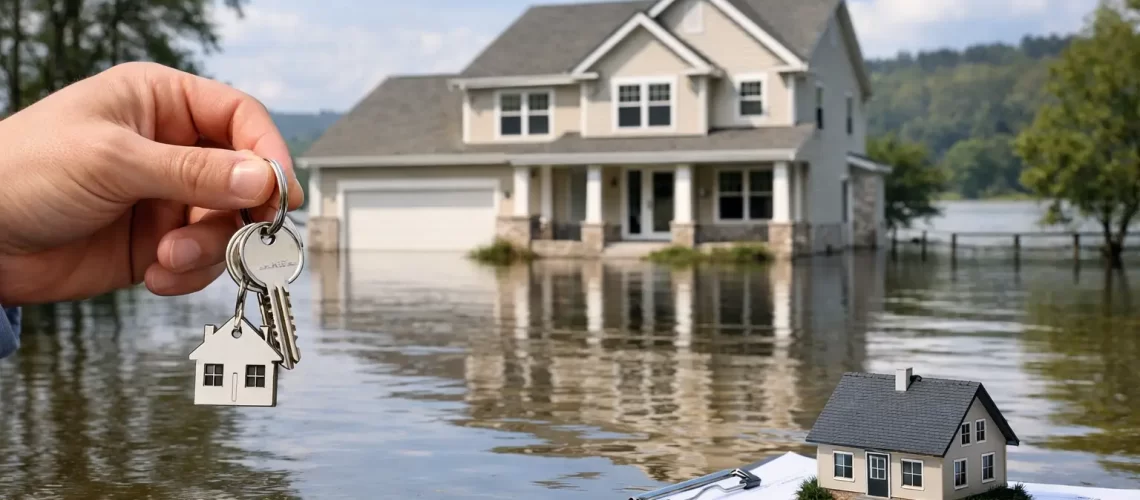
A house one block from the water can feel like a dream until the insurance quote arrives. In Florida, learning how to buy in floodplain areas is less about fear and more about asking better questions before you fall in love with the view.
For many buyers, especially in coastal communities, floodplain property is not unusual. It may include a waterfront home, a bungalow near the bay, or even a neighborhood that has never visibly flooded during a seller’s ownership. That is why this decision deserves careful, local, property-specific analysis. Buying in a floodplain is not automatically a bad move, but it is rarely a purchase you want to make on assumptions.
How to buy in floodplain areas with clear eyes
The first step is understanding that “floodplain” is not one single risk level. Some properties sit in higher-risk special flood hazard areas, while others are in moderate- or lower-risk zones. Two homes on the same street can have different elevations, different flood histories, and very different insurance costs. The map is only the starting point.
That matters because buyers often focus on the home price and monthly mortgage payment, then treat flood insurance as a side note. In reality, flood-related costs can materially change affordability. If a property requires flood insurance, your real monthly payment may look very different from the one you first calculated. Even when insurance is not required by a lender, it may still be wise depending on location, elevation, and your own comfort with risk.
A smart purchase starts with three parallel questions. What is the property’s flood zone? What does insurance likely cost right now? And how resilient is the structure itself? If you do not get clarity on all three, you are not really evaluating the property.
Start with the flood zone, but do not stop there
A flood zone tells you how FEMA categorizes flood risk for a property, but it does not tell the whole story. Buyers sometimes hear that a home is in an X zone and assume there is no meaningful flood concern, or hear AE or VE and assume the property is unbuyable. Neither reaction is helpful.
What you want is context. Ask whether the home is in a special flood hazard area, whether the lender will require flood insurance, and whether the current owner carries a policy. Also ask for the elevation certificate if one exists. That document can affect insurance pricing and helps you understand how the finished floor relates to expected flood levels.
This is one of those moments where local guidance matters. In places like St. Petersburg, Gulfport, Tierra Verde, or the beaches, flood exposure can vary dramatically based on a few feet of elevation, proximity to water, and the age and construction of the home.
Insurance should be part of the home search, not a post-offer surprise
One of the most common mistakes buyers make is waiting too long to price flood insurance. They get emotionally invested, negotiate hard, and then discover that the annual premium changes the math.
Get an insurance quote early, ideally before or during the offer stage. You want to know whether the current premium is likely to continue, whether the home has features that help or hurt pricing, and whether recent updates have been documented. An elevated home, compliant vents, updated mechanical systems, and other mitigation features may improve the risk profile. An older home with lower elevation may create a very different budget picture.
Insurance pricing can also shift over time. That does not mean you should avoid every floodplain property. It means you should buy with a realistic sense of carrying costs rather than relying on yesterday’s assumptions.
What to check before buying in a floodplain
Once the flood zone and insurance picture are clearer, the next question is the house itself. A well-prepared property and a poorly prepared one can both sit in the same zone, yet represent very different ownership experiences.
Pay attention to the home’s elevation, age, and construction type. Raised homes generally perform differently from slab-on-grade homes. Block construction may present one set of considerations, while frame homes present another. Where are the HVAC system, water heater, electrical panels, and outlets located? If key systems are elevated, that may reduce damage exposure in a flood event.
You should also ask about past permits and improvements. If a home has been substantially renovated, repaired after storm damage, or altered over time, it is worth understanding whether the work was properly permitted and whether floodplain compliance issues were triggered.
Ask direct questions about flooding history
Sellers’ disclosures matter, but they are not the only source of information. Ask whether the home itself has flooded, whether the garage or lower enclosure has taken on water, whether the street becomes impassable in heavy rain, and whether neighbors routinely experience drainage issues. A property can avoid interior flooding and still present frustrating real-world problems during storm season.
This is also where nuance matters. Some homes have experienced minor water intrusion once during an unusually severe event and then been meaningfully improved. Others show a pattern of repeated issues. The goal is not to panic over any past event. The goal is to understand the pattern, the severity, and the response.
The inspection needs to match the risk
A standard home inspection is essential, but in flood-prone areas it may not be enough on its own. Depending on the property, buyers may benefit from additional evaluation for moisture intrusion, drainage, roof condition, seawall or dock condition if applicable, and signs of prior water damage or improper repairs.
An inspector can help identify staining, replaced baseboards, patched drywall, warped flooring, or exterior grading issues. None of those findings automatically kills a deal. They simply give you leverage to ask better follow-up questions and make a more informed decision.
If the property includes ground-level enclosures, storage areas, or nonconforming space below base flood elevation, be especially careful. Buyers sometimes assume all enclosed square footage functions the same way. In floodplain properties, how a space is built and legally used matters.
The trade-offs are real, and so are the upsides
Many buyers considering how to buy in floodplain communities are drawn to things that genuinely improve daily life – water views, walkability to the beach, boating access, mature neighborhoods, and a sense of place that is hard to duplicate inland. Those benefits are real. So are the added responsibilities.
Owning in a floodplain can mean higher insurance, more weather preparation, stricter renovation considerations, and a different standard for due diligence. For some buyers, that trade-off is absolutely worth it. For others, especially those prioritizing lower monthly costs or minimal property risk, a different location or property type may be the better fit.
This is why the right question is not simply, “Should I buy in a floodplain?” The better question is, “Does this specific property make sense for my finances, risk tolerance, and long-term plans?”
Think about resale before you buy
Even if you plan to stay for years, resale matters. Future buyers are likely to ask the same questions you are asking now, and in some cases they may be even more sensitive to insurance cost and flood history.
A home with strong elevation, good documentation, thoughtful updates, and a clear ownership story tends to be easier to explain to the next buyer. A home with vague answers, unpermitted changes, or unresolved water issues may be harder to sell later, even in a desirable area.
That does not mean you should only buy the most conservative property available. It means you should understand how the home’s flood-related characteristics may affect marketability down the road.
A calm process leads to better decisions
Buying near the water or in a floodplain often comes with emotion. People imagine mornings on the porch, sunset walks, and the lifestyle they have worked toward. There is nothing wrong with that. The key is pairing that excitement with careful review of maps, insurance, inspections, disclosures, and the physical reality of the home.
A good advisor helps you stay grounded when a property is beautiful but complicated, and helps you move confidently when the risk is acceptable and well understood. That is especially valuable in Tampa Bay, where floodplain questions are a normal part of the conversation, not an edge case.
If you are considering a floodplain purchase, slow the process down just enough to get real answers. The right home can still be the right home – you just want to know exactly what you are buying, what it will cost to protect, and how it fits your life after the closing table.
