
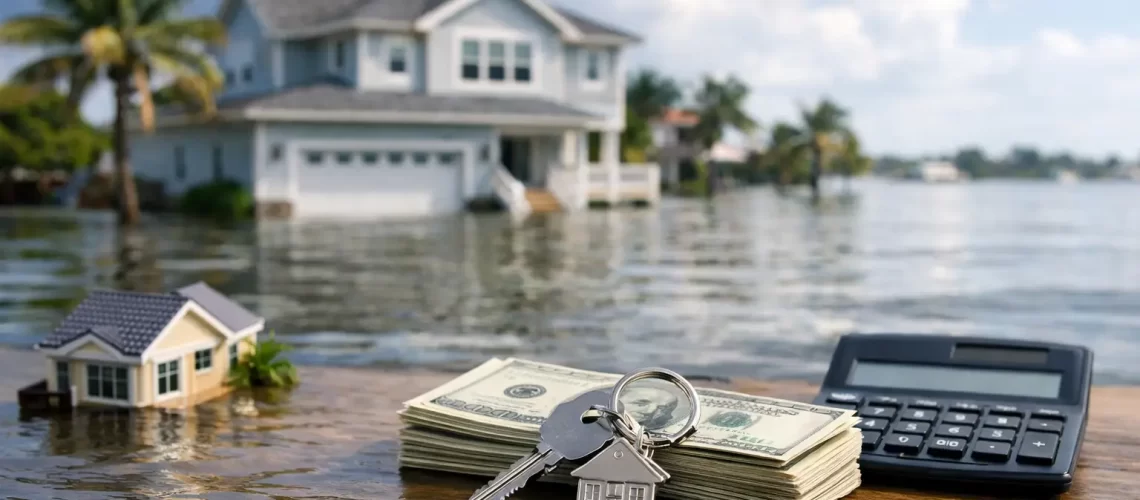
A home can check every box – great street, strong layout, even a water view – and then the insurance quote changes the math. That is why one of the most common questions buyers ask is how much is flood insurance in Florida, especially in places like St. Petersburg and the broader Tampa Bay area where water is part of daily life and part of real estate value.
The short answer is that flood insurance in Florida can range from a few hundred dollars per year to several thousand. For some owners outside high-risk flood zones, premiums may be relatively modest. For others, especially those with older homes, lower elevations, or direct coastal exposure, the annual cost can be significant. The real answer depends on the property itself, the flood zone, the elevation certificate when applicable, the amount of coverage, and the insurer’s rating method.
How much is flood insurance in Florida on average?
For many Florida homeowners, annual flood insurance premiums often fall somewhere between about $700 and $2,000, but that range is broad enough to be misleading if you treat it like a guarantee. Some homes come in below that. Others, particularly in coastal or repetitive-loss areas, can be much higher.
A condo unit may cost less to insure than a single-family waterfront home, depending on how the building policy is structured and what the unit owner still needs to carry individually. A house in a lower-risk zone with favorable elevation may have a surprisingly manageable premium. Meanwhile, a charming bungalow near the water with older construction and lower finished-floor elevation may produce a quote that catches buyers off guard.
That is why broad statewide averages are only a starting point. They can help frame expectations, but they cannot replace a property-specific quote.
What affects flood insurance costs in Florida?
Flood insurance pricing is not random, even if it can feel that way at first glance. Insurers look at a combination of map-based risk, home-specific details, and replacement considerations.
Flood zone matters, but it is not the whole story
Homes in FEMA-designated higher-risk areas, such as many AE or VE zones, typically cost more to insure than homes in lower-risk zones. If a lender requires flood insurance because the property is in a Special Flood Hazard Area, buyers usually do not have the option to skip it.
That said, two homes in the same flood zone can still have very different premiums. The zone gives context, but it does not tell the full story.
Elevation can change the quote dramatically
One of the biggest pricing factors is the relationship between the home’s elevation and the expected base flood elevation. In simple terms, insurers want to know how likely floodwater is to reach or enter the home. A property elevated above expected flood levels may be priced more favorably than a similar home sitting lower.
This is one reason newer homes, or older homes that have been substantially improved or elevated, may have better insurance outcomes than neighboring properties.
The age and construction of the home matter
Older homes often carry more flood risk because they were built to earlier standards. Enclosed lower levels, older foundations, crawlspaces, and certain utility placements can all affect pricing. Even where a home has character and location on its side, construction details may create a more expensive insurance profile.
Newer construction is not always cheap to insure, but homes built with more modern elevation and flood-resilient standards often have an advantage.
Coverage amount and deductible shape the premium
Higher building coverage and contents coverage generally mean a higher premium. Choosing a higher deductible may lower the annual cost, but that also means more out-of-pocket exposure if a flood occurs.
For buyers trying to manage monthly costs, this is often a balancing act rather than a simple search for the lowest premium.
Private flood insurance vs. NFIP coverage
When people ask how much is flood insurance in Florida, they are often thinking of a single standard policy. In reality, there may be more than one path to coverage.
The National Flood Insurance Program, or NFIP, is the option many homeowners know best. It offers standardized coverage and is widely accepted by mortgage lenders. For some properties, it is the most straightforward route.
Private flood insurance is also available and can sometimes offer lower pricing, higher coverage limits, or different underwriting flexibility. In other cases, private quotes may come in higher or may not be available for a specific property at all. The better choice depends on the home, the lender requirements, and the buyer’s risk tolerance.
This is one of those areas where shopping matters. Assuming one quote tells the whole story can be an expensive mistake.
Why two nearby homes can have very different flood premiums
This is where buyers get understandably frustrated. Two homes can sit just blocks apart, with similar square footage and similar asking prices, yet one has a flood premium under $1,000 and the other is several times that amount.
Usually, the difference comes down to the less visible details. Finished-floor elevation, prior claims history, type of foundation, flood openings, enclosure design, and even how utilities are located can shift the cost. One property may also have a more favorable insurance history or documentation that supports better pricing.
From a real estate perspective, this is why flood insurance should be part of the buying conversation early, not after inspections are complete and emotions are fully invested.
What buyers in Tampa Bay should look at before making an offer
In Pinellas County and across coastal Tampa Bay, flood insurance is not a side note. It can affect affordability, resale appeal, and even whether a home still feels like the right fit after the full monthly payment is calculated.
Before making an offer, buyers should review the property’s flood zone, ask whether current flood insurance is in place, and request as much insurance information as the seller can provide. It is also smart to ask whether an elevation certificate exists and whether the home has had past flood claims.
If a property is especially close to the water, recently renovated, substantially improved, or older with a lower elevation profile, getting an early insurance quote is more than a precaution. It is part of sound due diligence.
For sellers, this works both ways. Having clear flood-related documentation ready can reduce uncertainty and help buyers feel more confident about the property.
How much is flood insurance in Florida for condos?
Condos deserve their own conversation because the answer depends on the building’s master policy and the unit owner’s responsibilities. In some cases, the condominium association carries flood coverage for the structure, and the individual owner may only need contents coverage or supplemental protection. In other cases, there may be important gaps.
The cost for an individual condo owner can be lower than for a detached house, but not always. Ground-floor exposure, parking and storage configuration, and the association’s insurance planning all matter. Buyers should never assume that because a property is a condo, flood risk is automatically handled.
This is especially relevant in waterfront and near-water condo markets, where building-level decisions can affect individual ownership costs.
Can flood insurance be avoided?
Sometimes, but not always.
If a property is outside a lender-required flood zone and the buyer is paying cash or the lender does not require coverage, flood insurance may be optional. But optional does not mean unnecessary. Florida homes can flood outside high-risk zones, and many flood claims happen in areas where owners did not expect water to become a problem.
For buyers focused on protecting both their property and long-term financial stability, the better question is often not whether flood insurance is mandatory, but whether going without it is a risk worth taking.
How to estimate the real ownership cost
The most practical way to approach this is to treat flood insurance as part of the home’s core carrying cost, alongside taxes, homeowners insurance, HOA fees, and maintenance. A home with a lower purchase price but a very high flood premium may be less attractive over time than a slightly more expensive home with better insurability.
That does not mean buyers should avoid flood-zone properties. Many wonderful homes in Florida come with some degree of flood exposure, and for plenty of owners, the lifestyle and location are absolutely worth it. It just means the numbers need to be honest from the start.
At Kinest Realty, this is part of how we help clients make clear, grounded decisions in coastal markets. A beautiful home should still make sense on paper.
If you are weighing homes in St. Petersburg or anywhere in the Tampa Bay area, the smartest move is simple: get the insurance piece early. It will either give you peace of mind or save you from learning an expensive lesson too late.
