
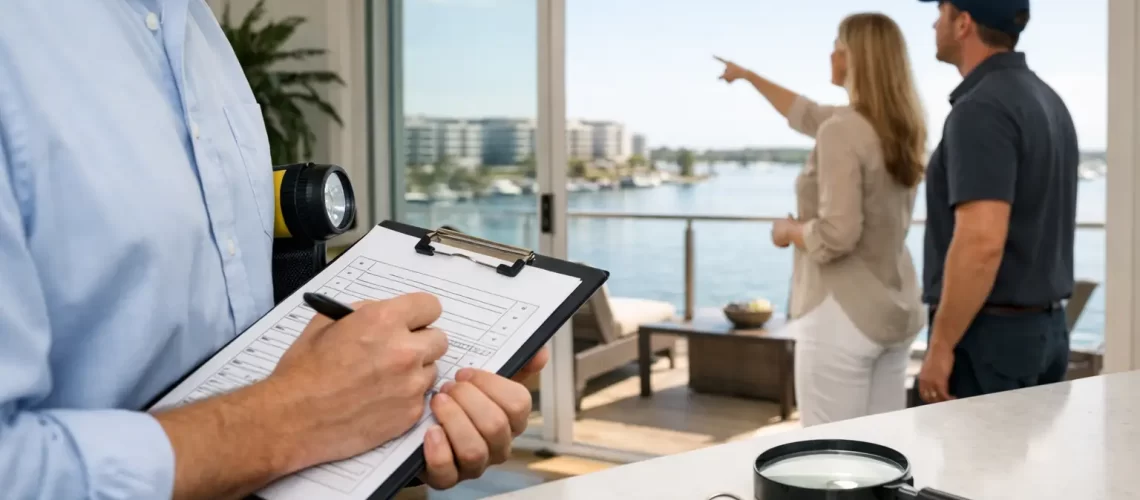
A sparkling water view can make it easy to focus on the balcony, the sunsets, and the lifestyle ahead. Before you get emotionally attached, though, a waterfront condo inspection checklist helps you look beyond the unit and evaluate the building systems, association responsibilities, and coastal conditions that can shape both your comfort and your long-term costs.
In Tampa Bay, waterfront condos can be exceptional homes and smart lifestyle choices. They also face conditions that inland properties do not: salt air, wind-driven rain, storm exposure, high humidity, and constant wear on exterior materials. A thoughtful inspection period is your opportunity to understand what you are buying, ask informed questions, and decide whether the property is the right fit.
Start With the Right Inspection Team
A standard home inspection is a valuable starting point, but waterfront condos often deserve additional expertise. Choose an inspector who regularly evaluates condos in coastal Florida and understands how saltwater exposure, elevated construction, and shared building systems affect a property.
Your inspector will generally focus on the unit and visible, accessible components. They may observe conditions in common areas, but they are not replacing an engineering review of the entire building. Depending on the condo’s age, condition, and location, it may be wise to consider specialists for electrical systems, HVAC, moisture intrusion, windows and doors, or a more detailed review of building concerns identified in association records.
The goal is not to expect a flawless coastal building. Every property has maintenance needs. The goal is to distinguish ordinary upkeep from conditions that could create substantial expense, safety concerns, or uncertainty after closing.
Waterfront Condo Inspection Checklist: 10 Priorities
1. Balcony structure, railings, and drainage
The balcony is part of the waterfront experience, but it is also exposed to sun, salt, rain, and wind. Look for cracked or spalling concrete, rust staining, loose railings, soft spots, deteriorated coatings, or pooling water. Ask whether balcony repairs have recently been completed, are planned, or have been discussed by the association.
A newly painted balcony can look reassuring, but paint alone does not answer structural questions. Inspection findings should be considered alongside maintenance records, repair invoices, and any engineering reports available through the condo association.
2. Windows, sliding doors, and storm protection
Waterfront units are often exposed to stronger wind and wind-driven rain than properties farther inland. Your inspector should check windows and sliding glass doors for operational issues, damaged seals, visible corrosion, water staining, and signs of air or moisture intrusion.
Ask what type of storm protection the building uses. Some communities have impact-rated windows and doors, while others rely on shutters or panels. Confirm who owns, maintains, and installs any shutters. That responsibility can vary by association and may affect both convenience and future planning.
3. Moisture, mold indicators, and indoor humidity
Florida humidity is a fact of life, but persistent moisture inside a condo is not something to dismiss. Inspectors commonly look beneath sinks, around windows, near exterior walls, at ceilings, and around HVAC equipment for staining, elevated moisture readings, or microbial growth indicators.
A musty smell, bubbling paint, warped baseboards, or recurring condensation can point to a leak, an HVAC drainage issue, poor ventilation, or a building-envelope concern. The source matters more than the cosmetic symptom. If moisture is found, ask for appropriate follow-up before making a decision.
4. HVAC age, drainage, and cooling performance
Air conditioning works hard in coastal Florida, particularly in units with broad west-facing glass or frequent sun exposure. Have the HVAC system evaluated for age, condition, cooling performance, refrigerant-line insulation, condensate drainage, and visible corrosion.
A system may be running on inspection day and still be nearing the end of its practical service life. If the equipment is older, factor replacement planning into your budget rather than assuming the seller will address it. Also ask whether the condenser is located on a balcony, roof, or shared mechanical area, since access and replacement procedures can differ by building.
5. Electrical panel, outlets, and corrosion
Salt air can accelerate corrosion on electrical equipment, particularly in exposed areas. Your inspection should include the electrical panel, accessible wiring, GFCI protection where appropriate, outlets, and any visible corrosion or overheating concerns.
Older waterfront buildings may have electrical components that were acceptable when installed but no longer align with a buyer’s expectations for modern appliances, charging needs, or renovation plans. If you hope to remodel, verify the association’s renovation rules and whether the unit’s electrical capacity can support your plans.
6. Plumbing fixtures, supply lines, and drain performance
Test faucets, toilets, drains, shutoff valves, the water heater, and visible plumbing connections. Slow drains, low water pressure, leaking valves, and corrosion around supply lines are all worth documenting.
With a condo, the line between unit responsibility and association responsibility can be complicated. A leak may originate in a neighboring unit, a shared plumbing stack, or a component serving your unit alone. The declaration, bylaws, and association manager can help clarify responsibility, but an inspector can help you identify what needs closer attention first.
7. Roof, exterior walls, and common-area condition
Even if the roof is not yours to maintain personally, its condition affects you. During the inspection period, observe the visible condition of exterior walls, walkways, stairwells, parking areas, seawalls where applicable, and common-area ceilings. Look for recurring staining, concrete deterioration, standing water, damaged finishes, or temporary patches.
You are not trying to inspect the entire community yourself. Instead, use what you see to guide questions about major maintenance projects, the timing of the last roof replacement, and whether the association has identified future capital needs.
8. Elevators, parking, and building access
For many condo buyers, everyday logistics matter as much as the view. Test your assigned parking space, storage area, entry access, elevator operation, and route from the parking area to the unit. Notice whether covered parking shows signs of water intrusion or whether the elevator feels well maintained.
Ask whether elevators have been modernized or are scheduled for major work. In a multi-story building, an extended elevator project can affect daily life, move-in logistics, and rental activity. These are not necessarily reasons to walk away, but they should be part of a clear-eyed buying decision.
9. Association records, reserves, and planned projects
The physical inspection and the document review belong together. Read the condo association’s financial information, budget, reserve details, meeting minutes, rules, insurance information, and notices about upcoming work. Pay close attention to recurring discussions about concrete restoration, roofs, elevators, plumbing, waterproofing, seawalls, or storm-related repairs.
A well-maintained building may have a higher monthly fee because it is actively funding necessary work. A lower fee is not automatically better if reserves are limited or significant projects are approaching. This is one of the most meaningful trade-offs in waterfront condo ownership: predictable ongoing costs versus the possibility of larger future assessments.
10. Flood exposure, insurance, and post-storm history
Waterfront living calls for practical questions about water. Review the property’s flood-zone information, ask about prior storm impacts, and understand what insurance the association carries versus what coverage you may need for the unit and your belongings.
Insurance availability and cost can change, and coverage details vary widely. Rather than relying on assumptions, speak with an insurance professional early in the process. Ask the association whether the building has experienced water intrusion, wind damage, or extended closures after past storms, and how repairs were handled.
Know What Belongs to the Unit and What Belongs to the Building
Condo ownership is shared ownership in practice, even when your home feels private. The unit’s interior may be your responsibility, while the exterior, roof, structural components, common plumbing, and amenities may be managed by the association. But the exact division depends on the governing documents.
Before the end of your inspection period, make sure you understand responsibility for windows, doors, balconies, HVAC equipment, plumbing lines, and storm protection. This is particularly important in older waterfront communities, where past repairs may have been handled differently over time.
A knowledgeable local real estate advisor can help you organize the questions, obtain available records, and keep the inspection process moving without minimizing legitimate concerns. At Kinest Realty, we believe a confident purchase comes from having clear information before you are committed, not from rushing past the details.
Use Findings to Make a Thoughtful Decision
An inspection report can feel intimidating because it lists every observed issue, from a loose outlet cover to an aging water heater. Focus first on health and safety concerns, active water intrusion, structural indicators, major system condition, and items that could signal a larger building-wide problem.
Then consider your own tolerance for projects and costs. A buyer seeking a turnkey seasonal retreat may make a different decision than someone comfortable planning upgrades over several years. There is no universal answer, but there should be no surprises about the condition you are accepting.
The right waterfront condo should offer more than a beautiful view. It should give you confidence that the building, association, and unit have been examined with the same care you bring to the life you plan to build there.
