
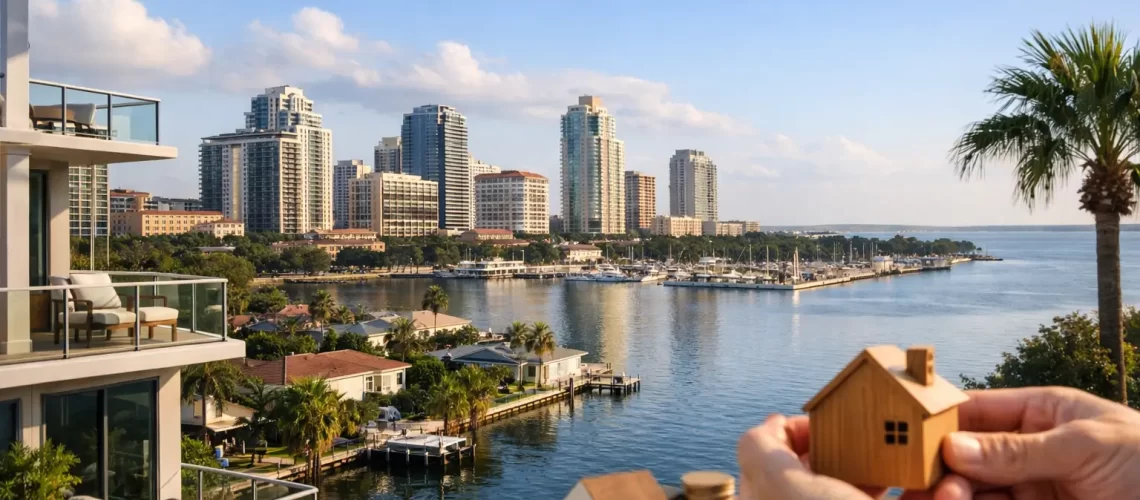
A downtown condo that sat for a weekend in 2021 might now take a few weeks to attract the right buyer. A well-kept bungalow in a sought-after neighborhood can still move quickly. That contrast says a lot about st petersburg housing trends right now – this is no longer a market where one headline explains everything.
For buyers and sellers in St. Petersburg, the real story is more local, more nuanced, and more dependent on property type than many people expect. Waterfront homes, older block construction, newer townhomes, beach-area condos, and historic neighborhood properties are not moving in lockstep. If you are planning a move, preparing to sell, or weighing an investment property, understanding those differences matters more than following broad market chatter.
What st petersburg housing trends are really showing
The biggest shift is a move away from a frenzied, one-speed market and toward a more selective one. Buyers are still active, but they are more discerning about price, condition, insurance implications, and monthly carrying costs. Sellers can still achieve strong results, but not by relying on momentum alone.
That means pricing strategy matters more than it did when nearly everything received immediate attention. Homes that are updated, well-presented, and priced in line with current buyer expectations often perform well. Homes that need significant work, carry higher risk factors, or start too high can linger and require reductions.
This is healthier in some ways. More balanced conditions tend to give both sides room to make thoughtful decisions. But it also creates more separation between homes that are market-ready and homes that are not.
Price sensitivity is back
One of the clearest housing trends in St. Petersburg is renewed price sensitivity. Buyers are looking closely at total monthly cost, not just purchase price. Insurance, flood exposure, HOA dues, maintenance needs, and utility efficiency all shape how a home feels financially.
That is especially relevant in coastal Florida, where two homes with similar square footage can carry very different ownership costs. A waterfront property may offer an exceptional lifestyle, but it also raises practical questions about flood zones, wind mitigation, and insurability. A charming older home may have tremendous appeal, but buyers often want clarity on roofs, plumbing, electrical systems, and storm resilience before they feel comfortable moving forward.
For sellers, this does not mean buyers are unwilling to pay for quality. It means they want the numbers to make sense. A home that clearly justifies its price through condition, location, upgrades, and documentation is in a stronger position than one asking buyers to overlook obvious concerns.
Condos and single-family homes are telling different stories
It helps to avoid treating condos and single-family homes as one category. In St. Petersburg, those segments often behave differently.
Single-family homes continue to attract broad demand because they offer privacy, outdoor space, and flexibility. Buyers relocating to the area, households seeking room to grow, and downsizers who want a lower-maintenance but still independent home all remain active in this segment. Desirable neighborhoods with strong character and access to parks, dining, or the waterfront still stand out.
Condos can be more variable. Downtown and beach-adjacent condos still appeal to buyers who want convenience and lifestyle, but monthly fees, building financials, maintenance history, and insurance realities play a larger role in decision-making than they once did. Buyers are asking more detailed questions before committing. That added scrutiny does not weaken the condo market across the board, but it does mean that well-managed buildings tend to stand apart more clearly.
For sellers, this distinction matters. A condo sale often depends not only on the unit itself, but also on the strength of the association, the building’s upkeep, and how confidently a buyer can understand future costs.
Neighborhood-level differences matter more than broad averages
Averages can flatten the picture. St. Petersburg is made up of neighborhoods with very different housing stock, price points, flood considerations, and buyer appeal. A move-in-ready home near downtown may attract a different buyer pool than a waterfront property in an area with higher carrying costs or a fixer-upper in a historic district.
This is why broad median price numbers only go so far. They can tell you whether the market is generally rising, cooling, or stabilizing, but they cannot tell you how your specific home is likely to perform. Two properties only a few miles apart may face very different levels of demand based on school preferences, commute patterns, storm risk perceptions, walkability, or renovation condition.
For buyers, local context can create opportunity. If one segment of the market has softened more than another, there may be more room to negotiate or more inventory to choose from. For sellers, neighborhood-specific strategy is essential. The right list price, prep plan, and marketing approach should reflect your immediate competition, not just citywide trends.
Move-in-ready homes still have an edge
Another important St Petersburg housing trends story is the premium buyers continue to place on homes that feel easy to own from day one. That does not mean every buyer wants perfection. It means many buyers are trying to limit surprises.
Fresh paint, clean presentation, updated systems, a newer roof, and clear maintenance records can make a meaningful difference. In a market where buyers are carefully evaluating monthly budgets and future upkeep, properties that reduce uncertainty often generate stronger interest.
This is especially true for sellers navigating major life transitions. If you are selling after a relocation, divorce, probate, or estate situation, it may not make sense to take on every possible improvement. But even in those cases, strategic preparation can protect value. Sometimes a focused pre-listing plan is more effective than a long list of expensive upgrades.
Insurance and flood considerations are shaping decisions
In St. Petersburg, housing trends cannot be discussed honestly without acknowledging insurance and flood-related concerns. Buyers today are more educated about these issues, and they should be. They are asking whether a property is in a flood zone, what mitigation features exist, and how older construction may affect ownership costs.
This does not mean buyers are avoiding waterfront or coastal homes. Many still prioritize those locations because the lifestyle is hard to replicate. It does mean that buyers are weighing risk and cost more carefully. That tends to reward sellers who can provide strong documentation and realistic pricing.
It also changes how buyers compare options. A home with similar aesthetics but lower exposure, stronger updates, or more favorable insurability may feel more attractive over time than a property with a lower sticker price but higher long-term uncertainty.
Buyers have more room, but not unlimited leverage
Compared with the most competitive stretch of recent years, buyers often have more time to evaluate homes, ask questions, and negotiate thoughtfully. Inspection periods matter again. Seller concessions may appear more often in some scenarios. Price reductions are not rare.
But that does not mean every buyer has the upper hand. Well-priced homes in desirable areas can still draw strong attention, especially when condition and location line up. Buyers who assume every listing is negotiable may miss good opportunities. The strongest approach is usually to stay disciplined, informed, and ready to act when a property truly fits.
For sellers, the lesson is similar. Flexibility helps, but confidence still matters when it is grounded in market evidence. A home that shows well and enters the market with a clear strategy is in a much better position than one that starts high and waits for the market to catch up.
What this means if you are selling now
If you are preparing to sell, the market is asking for precision. Accurate pricing, polished presentation, and realistic expectations carry more weight than they did in a hotter cycle. Buyers are paying attention to details, and the homes that perform best tend to answer buyer concerns before they become obstacles.
That may mean handling deferred maintenance, gathering insurance-related information, or making simple updates that improve first impressions. It may also mean understanding where your property fits. A turnkey downtown condo, a waterfront home, and a family home in a non-waterfront neighborhood should not be marketed the same way.
A boutique brokerage like Kinest Realty can be especially valuable in this kind of market because local nuance matters. When the market becomes more selective, personalized advice often makes a measurable difference.
What this means if you are buying now
If you are buying, this is a good time to stay both open-minded and careful. You may have more choices than buyers had a short time ago, and that can be an advantage. It gives you room to compare neighborhoods, weigh total ownership costs, and focus on long-term fit rather than rushing.
At the same time, not every listing is a bargain, and not every apparent deal stays attractive after insurance, HOA, or repair realities come into focus. The best buying decisions in this market often come from looking beyond surface finishes and asking practical questions early.
St. Petersburg remains a place people genuinely want to live, and that underlying appeal still supports the market. The current moment simply rewards clarity more than urgency. If you are paying attention to the right details, that can be a very good thing.
