
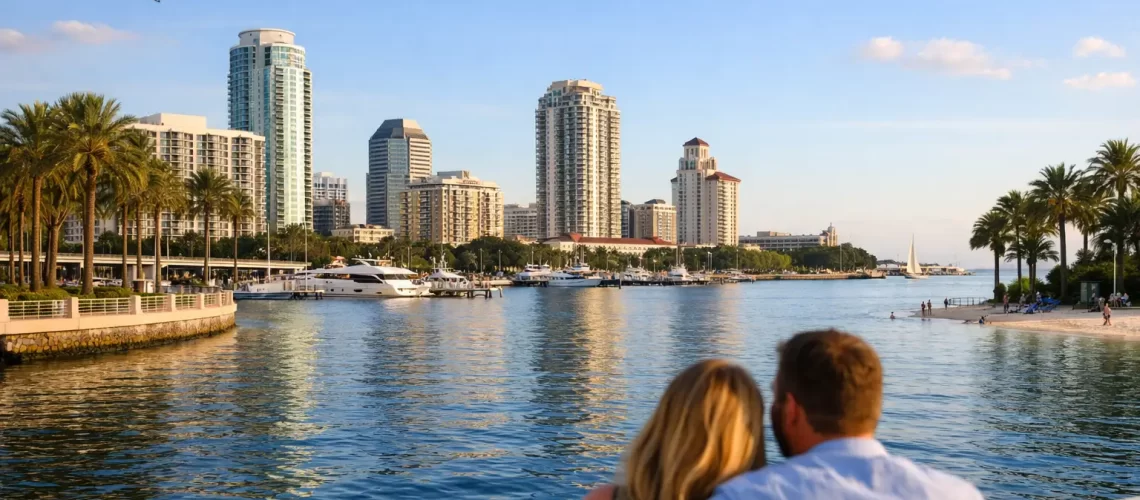
A move to St. Petersburg can look simple from the outside – sunshine, waterfront views, walkable districts, and a laid-back pace. But anyone seriously considering relocating to St Petersburg Florida usually realizes pretty quickly that the right decision is less about postcard appeal and more about fit. Your daily routine, budget, commute, storm comfort level, and long-term plans all matter here.
That is what makes this market exciting and, at times, a little tricky. St. Petersburg offers real variety in how people live. You can choose downtown energy, quiet historic neighborhoods, low-maintenance condo living, golf course communities, or coastal areas that put you close to the water. The best move is not finding the “best” neighborhood in general. It is finding the one that makes sense for the life you actually want to live.
What relocating to St Petersburg Florida really feels like
St. Petersburg has a reputation for being relaxed, and that part is true. People are outside more. Weekends often revolve around the water, local restaurants, parks, markets, and neighborhood events. At the same time, this is not a sleepy beach town. It is an active, growing city with a strong local identity, a serious arts presence, and a housing market that can move quickly in desirable areas.
For many buyers, the adjustment is not the weather or the palm trees. It is learning that one ZIP code can contain very different experiences. A home a few blocks inland may have different flood considerations, insurance costs, and traffic patterns than a property closer to the bay. A downtown condo may offer walkability and convenience, while a single-family home in a more residential area may offer space and privacy but require more driving. Small geographic differences can have a big impact on both lifestyle and ownership costs.
How to think about neighborhoods before you move
The smartest way to evaluate St. Petersburg is to start with your priorities, not with a list of popular areas. If your ideal day includes coffee shops, museums, waterfront parks, and the option to leave the car parked, downtown and nearby urban neighborhoods may feel like home. If you want a yard, quieter streets, and a more traditional neighborhood feel, there are many residential pockets throughout St. Pete and greater Pinellas County worth exploring.
Beach access is another major factor. Some buyers assume they need to live directly on the Gulf or the bay to enjoy the Florida lifestyle, but that is not always true. Living a short drive from the beach can open up more options on price, insurance, and lot size while still giving you easy access to the coast. On the other hand, if waking up to water views is central to your move, it helps to understand the premiums and risks that often come with waterfront ownership.
Commute matters too. Even buyers working remotely should think about airport access, visiting family, healthcare, and how often they expect to cross the bridges into Tampa or other parts of the region. A neighborhood that feels perfect on a map may feel different once you factor in rush hour or seasonal traffic.
Cost of living is more than the purchase price
One of the biggest mistakes people make when relocating to St Petersburg Florida is focusing almost entirely on the list price. In Florida, monthly ownership costs can shift meaningfully based on insurance, taxes, HOA fees, and property condition.
Homeowners insurance deserves special attention. Depending on the property, location, age of the roof, and flood exposure, insurance can be a more significant line item than out-of-state buyers expect. Flood insurance may also be a factor, and it is not something to treat as an afterthought. Even when a property is beautiful and well located, the full cost picture matters.
Condo buyers should look closely at association fees, reserves, rules, and building maintenance. A condo can be a great fit for someone who wants convenience and lower exterior maintenance, but not all buildings operate the same way. Fee structure, financial health, rental restrictions, and upcoming assessments can shape whether a property feels like a smart choice or a stressful one.
Flood zones, storms, and Florida-specific realities
This is where local guidance matters. Living near the water is part of the appeal of St. Petersburg, but coastal living comes with responsibilities. Flood zones are not automatically deal breakers. They are factors to understand clearly.
A home in a flood zone may still be the right choice if the property checks the right boxes, the insurance is manageable, and you are comfortable with the trade-offs. Likewise, a home outside a flood zone does not mean you can ignore storm preparation altogether. Buyers should understand elevation, prior storm impact, drainage, and the age and condition of major systems.
Roof age, windows, shutters, and construction type all deserve attention in this market. A charming older home may have character and a strong location, but it may also require more careful evaluation. Newer or updated homes can offer insurance advantages, though usually at a different price point. There is no single right answer. The goal is to make a fully informed decision instead of a rushed emotional one.
Renting first versus buying right away
Some relocations are clean and well timed. Others are layered with job changes, school decisions, family transitions, or uncertainty about where you want to land long term. In those cases, renting first can be a smart move.
Renting gives you a chance to test a neighborhood, learn the city, and avoid buying too quickly in an area that may not fit your real routine. This is especially helpful if you are moving from out of state and your picture of St. Petersburg is based mostly on short visits.
That said, renting is not automatically the better path. If you know your timeline, understand your financing, and have strong clarity around your goals, buying upfront can make sense. In a competitive segment of the market, waiting may mean paying more later or missing the chance to secure a home that truly suits you. This is one of those situations where it depends on your confidence, flexibility, and risk tolerance.
School districts, lifestyle, and long-term fit
Even buyers without children often ask about schools because they affect resale and neighborhood demand. But school decisions are only one piece of the puzzle. It also helps to think through how you want your life to function in this city over the next five to ten years.
Are you planning for aging in place? Do you want a property that could become an income-producing investment later? Are you downsizing and hoping to reduce maintenance? Do you need room for frequent guests, a home office, or multigenerational living? These questions often shape the right purchase more than square footage alone.
St. Petersburg attracts a wide mix of residents – young professionals, retirees, remote workers, growing families, and investors. That diversity is part of its appeal, but it also means there is no one-size-fits-all answer. A great relocation plan looks beyond the move itself and considers how the property will serve you once the boxes are unpacked.
Why local representation matters in a relocation
Relocation buyers are often making decisions quickly and from a distance. That creates risk. Photos rarely tell the full story of a block, a building, or a neighborhood feel. Online estimates do not explain how one side of a street differs from another, or why two homes with similar specs can carry very different ownership costs.
Strong local representation helps narrow the field, spot red flags early, and keep emotion from overriding practical judgment. That can mean identifying properties with better long-term value, explaining insurance implications before an offer is written, or helping you compare lifestyle trade-offs honestly instead of just selling the dream.
For clients making a major transition, that kind of support matters. A boutique brokerage like Kinest Realty can often offer the close communication and hands-on guidance that relocation clients need, especially when timing, logistics, and local nuance all intersect.
A better way to prepare before your move
If you are serious about relocating, start by defining your non-negotiables and your flex points. Decide what matters most among budget, location, walkability, water access, property type, and monthly carrying costs. Then stress-test those priorities against real market conditions, not just ideal scenarios.
It also helps to spend time in the city with intention. Visit at different times of day. Drive the routes you would actually use. Pay attention to how each area feels, not just how it photographs. Ask practical questions about insurance, age of systems, HOA structure, flood exposure, and resale potential.
St. Petersburg can be a wonderful place to build your next chapter, but the best moves here are thoughtful ones. The right home should not just impress you on showing day. It should support the life you want to live after the excitement of the move settles in.
