
A buyer decides how a home feels within moments of stepping through the front door. The best home staging ideas do not try to make a property look like someone else lives there. They help buyers notice the light, flow, storage, and lifestyle your home already offers.
For sellers in St. Petersburg and across Tampa Bay, thoughtful staging can be especially valuable. Buyers often compare several homes in a single day, then revisit listings online at night. A clean, inviting, well-scaled space gives them something memorable to come back to – and helps your listing photography work harder from the start.
Home Staging Ideas That Start With First Impressions
1. Make the entry feel easy and welcoming
The entry sets the emotional tone. Clear away shoes, packages, pet supplies, and extra furniture that narrows the path inside. A simple doormat, clean front door, fresh hardware, and a healthy porch plant can make the arrival feel cared for without becoming overly styled.
If your entry is small, resist the urge to fill it. Buyers should be able to step in, pause, and take in the home. Space is part of the presentation.
2. Edit before you decorate
Most homes do not need more decor to show well. They need less visual noise. Start by removing excess furniture, countertop appliances, crowded shelving, personal collections, and items stored on the floor.
Editing helps rooms photograph larger and makes their intended purpose easier to understand. A spare bedroom filled with boxes and office equipment may be perfectly functional for daily life, but a buyer may struggle to see it as a guest room, nursery, or workspace. Create one clear use for each room whenever possible.
This does not mean stripping away all personality. A few books, a textured throw, and restrained artwork can make a home feel warm. The goal is for buyers to picture their life there, not to feel as though they are intruding on yours.
3. Let natural light do its job
Florida buyers notice light. Before photos and showings, open blinds and curtains, clean the windows, and remove heavy treatments that block a pleasant view. Replace burned-out bulbs and use consistent bulb temperatures within each room so the lighting feels intentional rather than patchy.
Bright does not always mean harsh. In rooms with intense afternoon sun, light-filtering window coverings can soften glare while preserving the sense of openness. For waterfront or outdoor-facing rooms, arrange furniture to acknowledge the view instead of turning away from it.
4. Give every room a clear purpose
Buyers need help understanding how a home lives. A dining room used as storage, a garage-like sunroom, or a catch-all flex space can leave them questioning square footage and function.
You do not need to buy a full set of new furniture. Sometimes a small desk, a chair, and one lamp can clarify an office nook. A neatly made bed and modest nightstands can transform an underused room into a believable guest space. Use pieces that fit the room’s scale, leaving enough open floor area to show its dimensions.
Stage the Rooms Buyers Remember Most
5. Simplify the living room conversation area
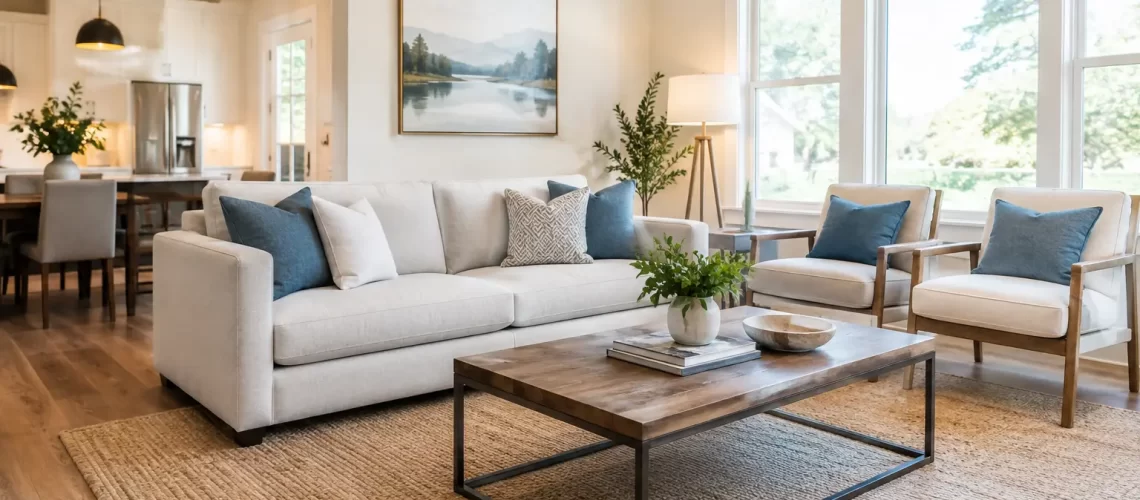
Living rooms often collect the largest furniture and the most accessories. Pull bulky pieces away from walkways, remove extra chairs, and create a natural seating arrangement that suggests conversation. If the room is compact, one properly sized sofa and a pair of accent chairs may show better than a sectional that consumes the space.
A neutral area rug can define the seating area, while a few pillows add comfort and color. Keep coffee tables mostly clear. Buyers should notice the room itself before they notice what is sitting on every surface.
6. Make the kitchen feel clean, useful, and calm
A staged kitchen should feel ready for a busy morning, not ready for a magazine shoot. Clear counters except for a few intentional items, such as a bowl of citrus, a small plant, or a wooden board. Hide dish racks, cleaning supplies, refrigerator magnets, and the stack of mail that naturally lands near the door.
Cabinets and drawers matter, too. Buyers may open them. Organize enough that storage appears practical, but do not empty every cabinet to the point that the kitchen feels unused. A clean, functioning kitchen communicates care far more effectively than elaborate styling.
7. Create a restful primary bedroom
The primary bedroom should feel like a place to decompress. Use simple bedding in calm colors, clear the tops of dressers, and remove oversized or unnecessary furniture. If possible, leave paths open around the bed so the room feels comfortable rather than tightly packed.
Personal photographs and highly specific decor are often best packed early. This can be an emotional step, especially in a longtime family home. Consider it part of preparing for the move ahead: each box packed now is one less detail to manage later.
8. Treat bathrooms like small hotels
Bathrooms benefit from a straightforward reset: deep clean, clear counters, replace worn towels, and repair small cosmetic issues such as loose hardware or a stained caulk line. Keep only a few coordinated towels and perhaps a modest soap dispenser visible.
Avoid strong fragrance products. Fresh air and clean surfaces are more reassuring than a scent that may feel overpowering to a buyer. In Florida’s humid climate, also pay close attention to exhaust fans, shower doors, and any signs of moisture that deserve maintenance before the home is shown.
Use Outdoor Space as Part of the Home
9. Show what the outdoor area is for
Patios, balconies, lanais, and backyards often carry real value in Tampa Bay, but only when buyers can picture using them. Sweep the surfaces, remove broken or mismatched furniture, and define a simple activity: dining, morning coffee, reading, or relaxing after the beach.
Even a small condo balcony can feel meaningful with two clean chairs and a small table. For larger yards, trim overgrowth, refresh mulch where needed, and make sure gates, screens, and outdoor lighting are in good working order. Staging cannot replace deferred maintenance, so address the basics first.
10. Prepare for listing photos, not just showings
Photos are often a buyer’s first showing. Before the photographer arrives, remove trash bins, pet bowls, cords, tissue boxes, and bathroom products. Turn on interior lights, open appropriate window treatments, and check each room from the camera’s likely angle.
Curb appeal belongs in this process as well. Park vehicles out of the driveway when practical, bring in recycling bins, and make the front landscape look tidy. A strong first photo can earn the click that leads to a showing.
11. Do not hide repairs behind staging
Fresh pillows cannot distract from a leaking faucet, damaged screen, or peeling paint for long. Buyers tend to notice small signs of neglect and may wonder what else has been overlooked. Prioritize visible repairs that improve confidence, safety, and daily function before spending heavily on decorative extras.
The right level of preparation depends on the home’s condition, price range, and likely buyer. A vacant downtown condo may benefit from professional furniture rental, while a well-kept family home may only need editing, cleaning, and a few strategic updates. Staging should support your pricing and marketing strategy, not become an expensive project without a clear purpose.
12. Keep it show-ready with a simple routine
Once your home is staged, daily life still happens. Create a short routine for showings: make beds, wipe counters, put away pet items, empty small trash cans, and turn on lights. Keep a basket or bin handy for last-minute items that need to disappear quickly.
For homes with children, pets, or demanding schedules, perfection is not realistic. Consistency is. A practical plan reduces stress and makes it easier to say yes when a qualified buyer wants to see the home.
Thoughtful staging is not about making your home feel generic. It is about making its best features easy to see. When you are preparing to sell, a local real estate advisor can help you decide which improvements will truly support your goals and which ones are safe to skip.
