
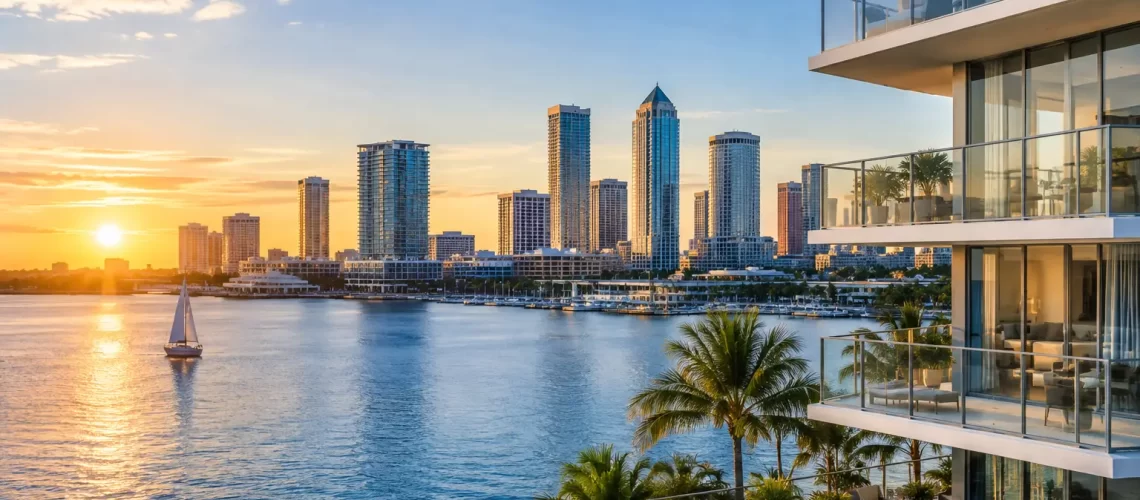
A balcony view can make a buyer stop scrolling, schedule a showing, and picture an entirely different daily life. That enduring emotional pull is one reason people ask, do waterfront condos appreciate? The short answer is often yes, but waterfront status alone does not guarantee stronger value growth. In Tampa Bay, a condo’s long-term performance depends on the quality of its water access, its building’s financial health, its insurance profile, and how well it fits the buyers who will want it next.
For buyers, the goal is not simply to find a beautiful view. It is to understand what makes that view durable as an investment in your lifestyle and your future resale position. For sellers, the same factors shape how a property should be priced, presented, and explained to the market.
Do Waterfront Condos Appreciate More Than Other Condos?
Waterfront condos can appreciate well because true waterfront locations are limited. A building on the Gulf, Tampa Bay, Boca Ciega Bay, or a protected marina cannot be recreated once surrounding land is developed. That scarcity can support demand, particularly when a property offers open water views, beach access, a walkable setting, or easy boating access.
But “waterfront” covers a wide range of experiences. A direct Gulf-front condo with an unobstructed sunset view is not interchangeable with a unit overlooking a canal, a marina, a retention pond, or a busy roadway near the water. Buyers tend to recognize those differences quickly, especially when comparing monthly costs and building amenities.
The strongest appreciation potential generally comes from a combination of location and livability. A well-maintained condo in a desirable coastal setting may attract retirees, second-home buyers, local downsizers, and buyers seeking a low-maintenance primary residence. That broader buyer appeal can help support resale demand through changing market cycles.
Still, waterfront ownership comes with expenses and risks that inland buyers may not face to the same degree. Higher insurance costs, association fees, deferred maintenance, special assessments, storm exposure, and aging infrastructure can affect affordability. When ownership costs rise faster than what buyers are willing or able to absorb, pricing pressure can follow, even in an exceptional location.
What Drives Waterfront Condo Appreciation?
The quality of the water view and access
Not all views are equally valuable. Direct, protected, and usable water access tends to carry more weight than a distant glimpse between buildings. A higher floor may command more interest when it improves the view, while a ground-floor unit may be especially appealing if it offers a patio, beach access, or convenient access for pets and daily living.
Buyers also notice what the view faces. Open water, sunsets, downtown skylines, marina activity, and quiet natural settings each attract different audiences. The key is not declaring one universally better than another. It is understanding which features are most valuable for that specific building and neighborhood.
The building itself
A remarkable location cannot fully overcome a poorly maintained building. Before paying a waterfront premium, buyers should look closely at the condition and management of the condominium association. The building’s appearance matters, but so do the less visible details: roof condition, elevators, balconies, seawalls, parking areas, mechanical systems, reserves, upcoming projects, and the association’s approach to maintenance.
Well-run buildings often preserve value more effectively because buyers feel more confident about what they are purchasing. Clear records, thoughtful planning, and consistent upkeep can reduce uncertainty. On the other hand, a low monthly fee is not always a bargain if it reflects years of postponed maintenance.
Monthly carrying costs
When buyers compare condos, they do not look only at the purchase price. They consider the total monthly picture, including association dues, insurance requirements, utilities covered by the association, parking, and any amenities that affect the budget.
Waterfront buildings can have meaningful operating costs. Those costs may be entirely reasonable for the lifestyle and services provided, but they must align with the value buyers perceive. A building with higher fees may remain highly desirable when it offers strong reserves, quality amenities, well-kept common areas, and fewer looming capital needs. The concern is not simply that fees are high. It is whether buyers can clearly see what those fees support.
Supply, lifestyle demand, and local convenience
Waterfront scarcity matters most when people want to live there. In and around St. Petersburg, that demand is often connected to more than the shoreline itself. Buyers may value proximity to restaurants, parks, marinas, beaches, cultural attractions, medical services, or downtown conveniences. A condo that makes everyday life easier can appeal to a wider group than one that offers a view but little practical access to the surrounding area.
New construction can also influence resale values. A new building may raise the profile of an area, but it can create fresh competition for older condos. Older buildings that remain competitive usually do so by offering something difficult to replace: a superior location, larger floor plans, established landscaping, generous outdoor space, or a more intimate residential feel.
The Florida Factors Buyers Should Review Carefully
Waterfront condo buyers should approach due diligence with patience. This is not about being fearful. It is about making a clear-eyed decision before becoming emotionally attached to a particular view.
Start with the association documents and recent meeting minutes. These materials can provide useful context about planned repairs, building projects, recurring concerns, rules, rental policies, and how the association handles major decisions. Ask questions when something is unclear, and allow time to review the answers.
Insurance deserves equal attention. Florida insurance conditions can change, and coverage structures vary among associations. Buyers should understand what the association insures, what may be their individual responsibility, and how insurance costs are reflected in the budget and dues. A trusted insurance professional can help explain the coverage considerations for a particular property.
Flood exposure and elevation are also part of the conversation. Waterfront living does not mean every property has the same flood risk or insurance profile. The building’s location, construction, elevation, and flood-zone designation all matter. A local real estate advisor can help buyers frame the right property-specific questions, while qualified insurance and inspection professionals can provide the technical guidance needed for a confident decision.
Finally, consider the condo’s rental restrictions. Some buyers want occasional flexibility, while others are purchasing strictly as a primary residence. Rental rules can shape both your intended use and the future buyer pool when it is time to sell. The right policy depends on your goals, not on a one-size-fits-all answer.
When Waterfront Appreciation Can Be Less Predictable
Waterfront condos are not automatically safer or faster-growing than every other property type. Values can be less predictable when a building has substantial deferred maintenance, frequent assessments, limited reserves, restrictive financing conditions, or monthly costs that have moved beyond comparable options nearby.
A view can also be vulnerable to change. Before buying, consider nearby development patterns, public spaces, marina activity, traffic, and anything that could affect privacy, noise, access, or sightlines. A buyer should not assume that an open view today will remain identical forever.
The timing of your ownership matters, too. Condo values move in cycles, and selling shortly after purchase can make transaction costs more significant. Waterfront ownership tends to make the most sense for people who value the property’s lifestyle today while giving themselves enough time for market conditions and demand to work in their favor.
A Smarter Way to Evaluate a Waterfront Condo
Rather than asking whether every waterfront condo will appreciate, ask whether this particular condo has durable appeal. Compare recent sales within the same building first, then look at closely competing buildings with similar water access, age, amenities, and monthly costs. A broad neighborhood average can be misleading when one building has very different financials or views than another.
Pay attention to the units that sell quickly and the ones that linger. Often, the difference is not square footage alone. It may be floor level, view direction, updates, parking, deeded storage, pet policies, association reputation, or clarity around upcoming work. These details become especially important when buyers have several attractive waterfront options.
For sellers, preparation matters just as much. Waterfront features should be marketed with precision, not vague language. Buyers want to know what they are seeing from the balcony, how they access the water, what the association maintains, and what makes the unit stand apart. Transparent answers build confidence and can protect the perceived value of a premium property.
A waterfront condo can be a meaningful long-term asset, but it should first be a place you can enjoy and afford with confidence. The best decision usually comes from pairing the emotional value of the water with a careful review of the building, the costs, and the resale story that will matter when your next chapter begins.
